
Sufan Zheng
Overview
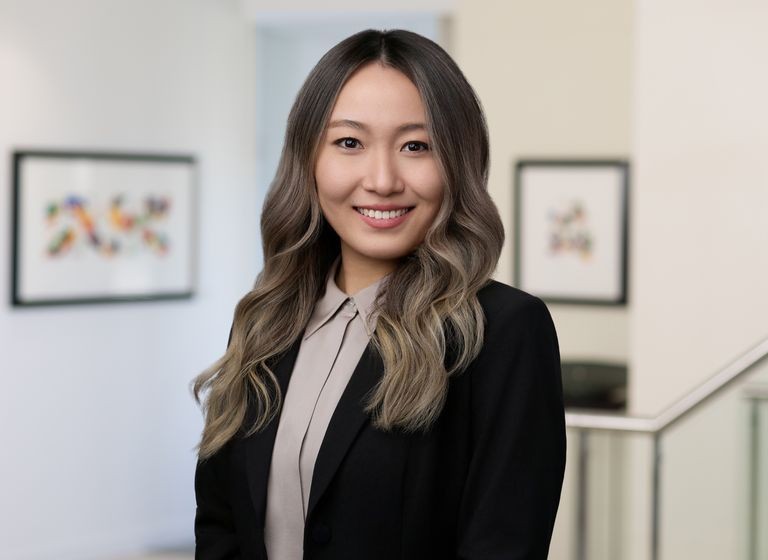
Sufan is an associate in the firm's Chicago office, focusing on intellectual property law, including patent litigation and prosecution. With a robust technical background and experience in multiple technical disciplines, she serves global clients across diverse industries, offering tailored legal solutions.
Career & Education
- Student Associate, Law and Entrepreneurship Clinic: University of Wisconsin Law School, 2023
- Research Assistant: Tsinghua University, 2019–2022
- University of Wisconsin – Madison, J.D., 2025
- Tsinghua University, M.Eng., Materials Engineering, 2022
- Fudan University, B.S., Material Physics, 2019
- Illinois
- Wisconsin
- Mandarin
Sufan's Insights
Client Alert | 3 min read | 05.21.26
Judge Jennifer Choe-Groves Takes Over Several DNJ Hatch-Waxman Cases
The U.S. Court of International Trade (CIT) is having a big year. While the U.S. Supreme Court’s affirmance of the CIT tariff ruling may be at the top of the headlines, the CIT is also making its mark on Hatch-Waxman pharmaceutical litigation. In late April 2026, the U.S. District Court for the District of New Jersey (DNJ) reassigned numerous Hatch-Waxman patent infringement cases involving 10 different drugs to Judge Jennifer Choe-Groves of the CIT, sitting by designation in the District of New Jersey. The cases currently assigned to Judge Choe-Groves relate to several different drug products, including LYNPARZA® (olaparib), RADICAVA ORS® (edaravone), NEXLETOL®/NEXLIZET® (bempedoic acid), ZEJULA® (niraparib), QULIPTA® (atogepant), UBRELVY® (ubrogepant), CREXONT® (carbidopa and levodopa), EVRYSDI® (risdiplam), SUFLAVE® (polyethylene glycol 3350, sodium sulfate, potassium chloride, magnesium sulfate, and sodium chloride for oral solution), and CAPLYTA® (lumateperone).
Client Alert | 5 min read | 11.26.25
From ‘Second’ to ‘First:’ Federal Circuit Tackles Obvious Claim Errors
Insights

Sufan's Insights
Client Alert | 3 min read | 05.21.26
Judge Jennifer Choe-Groves Takes Over Several DNJ Hatch-Waxman Cases
The U.S. Court of International Trade (CIT) is having a big year. While the U.S. Supreme Court’s affirmance of the CIT tariff ruling may be at the top of the headlines, the CIT is also making its mark on Hatch-Waxman pharmaceutical litigation. In late April 2026, the U.S. District Court for the District of New Jersey (DNJ) reassigned numerous Hatch-Waxman patent infringement cases involving 10 different drugs to Judge Jennifer Choe-Groves of the CIT, sitting by designation in the District of New Jersey. The cases currently assigned to Judge Choe-Groves relate to several different drug products, including LYNPARZA® (olaparib), RADICAVA ORS® (edaravone), NEXLETOL®/NEXLIZET® (bempedoic acid), ZEJULA® (niraparib), QULIPTA® (atogepant), UBRELVY® (ubrogepant), CREXONT® (carbidopa and levodopa), EVRYSDI® (risdiplam), SUFLAVE® (polyethylene glycol 3350, sodium sulfate, potassium chloride, magnesium sulfate, and sodium chloride for oral solution), and CAPLYTA® (lumateperone).
Client Alert | 5 min read | 11.26.25
From ‘Second’ to ‘First:’ Federal Circuit Tackles Obvious Claim Errors
