
Rachel Lee
Overview
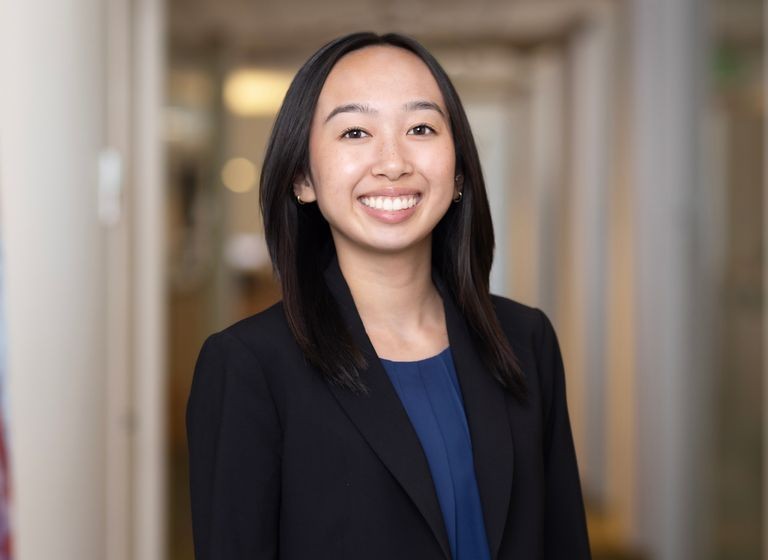
Rachel Lee is an associate in Crowell & Moring’s San Francisco office, where she practices in the Litigation and the Energy, Environment, and Natural Resources groups.
Career & Education
- U.S. District Court for the Central District of California
Judicial Extern, 2024 - Superior Court of San Francisco County
Judicial Extern, 2020 - Department of Justice: U.S. Attorneys' Office
Central District of California, Criminal & National Security Extern, 2023
- U.S. District Court for the Central District of California
- Bark & Co Solicitors, Intern, 2021
- Volunteer Lawyers Project of the Boston Bar Association, Family and Guardianship Unit Intern, 2021
- Boston Court Service Center, Intern, 2020-2021
- University of California, Los Angeles School of Law, J.D., 2025
- Boston University, B.A., summa cum laude, 2022
- California
- Cantonese
Rachel's Insights

Client Alert | 4 min read | 07.27.26
On June 18, 2026, the California Department of Toxic Substances Control (DTSC) added microplastics to the list of Candidate Chemicals maintained under the state’s Safer Consumer Products (SCP) regulations. The listing of microplastics, which becomes effective on October 1, 2026, is the first step in the SCP regulatory process, which could lead to restrictions on products that contain or release microplastics.
Blog Post | 07.21.26
State AG News: Robocalls, Fintech, Administrative Law (July 9-16, 2026)
Client Alert | 4 min read | 07.09.26
Client Alert | 4 min read | 06.04.26
Surveillance Pricing Update: California’s Sweeping AB 2564 Passes Assembly and Heads to Senate
Insights


State AG News: Robocalls, Fintech, Administrative Law (July 9-16, 2026)
|07.21.26
Crowell & Moring's State AG Blog State AG News: Deceptive Practices, Privacy Violations, Antitrust Lawsuit (May 8-14, 2026)
|05.15.26
Crowell & Moring's State AG Blog
Landmark Verdicts Against Meta and YouTube Signal New Era of Social Media Platform Liability
|04.01.26
Crowell & Moring’s Retail & Consumer Products Law Observer
- |
03.06.26
Crowell & Moring’s State AG Blog
State AG News: Consumer Protection Enforcement, Federal Funding, AI (December 18-24, 2025)
|12.30.25
Crowell & Moring’s State AG Blog
Industries
Rachel's Insights
Client Alert | 4 min read | 07.27.26
On June 18, 2026, the California Department of Toxic Substances Control (DTSC) added microplastics to the list of Candidate Chemicals maintained under the state’s Safer Consumer Products (SCP) regulations. The listing of microplastics, which becomes effective on October 1, 2026, is the first step in the SCP regulatory process, which could lead to restrictions on products that contain or release microplastics.
Blog Post | 07.21.26
State AG News: Robocalls, Fintech, Administrative Law (July 9-16, 2026)
Client Alert | 4 min read | 07.09.26
Client Alert | 4 min read | 06.04.26
Surveillance Pricing Update: California’s Sweeping AB 2564 Passes Assembly and Heads to Senate
