
Jared Engelking

Overview
Jared advises clients on criminal and civil government investigations, enforcement actions, and litigation. He represents individuals and businesses in all phases of internal corporate investigations and assists clients in strategically responding to government inquiries including grand jury investigations, search warrants, and civil investigative demands.
Career & Education
- U.S. Department of Justice
Trial Attorney, U.S. Department of Justice, Criminal Division, 2023–2026
Special Assistant United States Attorney, United States Attorney's Office, Eastern District of Virginia, 2023
Special Assistant United States Attorney, United States Attorney's Office, District of Maryland, 2021–2023
- U.S. Department of Justice
- American University Washington College of Law, J.D., magna cum laude, Order of the Coif
- Tufts University, B.A., political science
- District of Columbia
- Maryland
Jared's Insights
Client Alert | 4 min read | 08.14.26
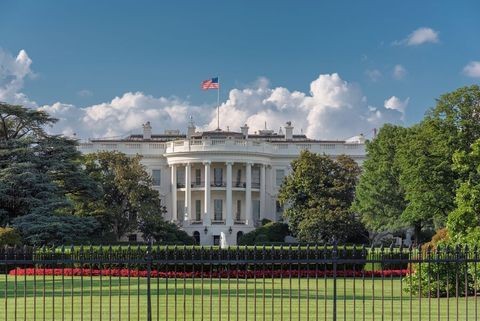
License to Hack? The White House Greenlights Private-Sector Offensive Cyber Operations
On August 12, 2026, the White House released a National Security Presidential Memorandum (NSPM), marking a seismic shift in U.S. cybersecurity policy and establishing a framework to authorize private-sector companies to conduct offensive cyber operations—historically strictly prohibited by federal law—against foreign Cyber-Enabled Transnational Criminal Organizations (CE-TCOs). It builds on an executive order issued in March 2026 that directed federal agencies to develop plans to combat cyber-crimes against Americans.
Publication | 05.28.26
Client Alert | 5 min read | 03.30.26
Déjà Vu? New Executive Order Outlines Restrictions on Contractor and Subcontractor DEI Activity
Representative Matters
- Represented a multinational biotechnology company in an internal investigation into potential Foreign Corrupt Practices Act (FCPA) violations associated with imports into South American countries.
- Represented a CEO of defense contractor in high-profile investigation of alleged bank fraud in connection with Paycheck Protection Program (PPP) loans.
- Represented a defense contractor in a bet-the-company investigation of alleged False Claims Act (FCA) violations for knowingly supplying defective vehicles to the U.S. military.
- Represented a Fortune 500 government contractor in an internal investigation, disclosure, and federal criminal investigation of alleged small-business fraud, kickbacks, and related misconduct.
- Represented an international financial institution in connection with a DOJ investigation of money laundering, FCPA violations, and kleptocracy.
- Represented a large agricultural producer in EPA and DOJ enforcement actions arising under the Clean Water Act and Clean Air Act.
- Represented Fortune 100 transportation company in parallel criminal and FCA investigations of alleged overcharging of federal government based on misrepresentations of contract performance.
Jared's Insights
Client Alert | 4 min read | 08.14.26
License to Hack? The White House Greenlights Private-Sector Offensive Cyber Operations
On August 12, 2026, the White House released a National Security Presidential Memorandum (NSPM), marking a seismic shift in U.S. cybersecurity policy and establishing a framework to authorize private-sector companies to conduct offensive cyber operations—historically strictly prohibited by federal law—against foreign Cyber-Enabled Transnational Criminal Organizations (CE-TCOs). It builds on an executive order issued in March 2026 that directed federal agencies to develop plans to combat cyber-crimes against Americans.
Publication | 05.28.26
Client Alert | 5 min read | 03.30.26
Déjà Vu? New Executive Order Outlines Restrictions on Contractor and Subcontractor DEI Activity
Insights

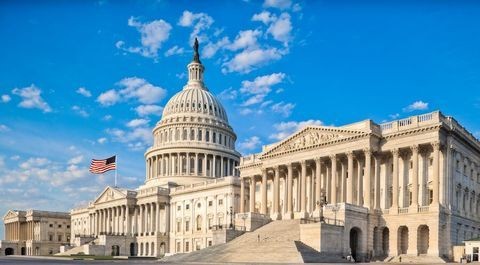

Déjà Vu? New Executive Order Outlines Restrictions on Contractor and Subcontractor DEI Activity
|04.09.26
Crowell & Moring’s Government Contracts Legal Forum
Jared's Insights
Client Alert | 4 min read | 08.14.26
License to Hack? The White House Greenlights Private-Sector Offensive Cyber Operations
On August 12, 2026, the White House released a National Security Presidential Memorandum (NSPM), marking a seismic shift in U.S. cybersecurity policy and establishing a framework to authorize private-sector companies to conduct offensive cyber operations—historically strictly prohibited by federal law—against foreign Cyber-Enabled Transnational Criminal Organizations (CE-TCOs). It builds on an executive order issued in March 2026 that directed federal agencies to develop plans to combat cyber-crimes against Americans.
Publication | 05.28.26
Client Alert | 5 min read | 03.30.26
Déjà Vu? New Executive Order Outlines Restrictions on Contractor and Subcontractor DEI Activity
