
Global Mobility in the Post-Brexit World: What Will 2021 Bring for Employers in Europe?
Client Alert | 3 min read | 01.04.21
The U.K. left the European Union (EU) on January 31, 2020 under the terms of the Withdrawal Agreement, an agreement struck by London and Brussels in October 2019. During the standstill post-Brexit transition period, that ran until December 31, 2020, most of the arrangements that were valid during the U.K.’s EU membership were kept in place. As a result, in 2020, virtually nothing changed for employers in relation to cross-border employment and business travel.
However, now that the transition period has expired, U.K. nationals working in an EU member state are considered to be third-country nationals. What does this mean for your employees with U.K. citizenship?
- U.K. employees already legally working (and residing) in Belgium or any other EU member state on December 31, 2020 (in Belgium, this mainly concerns U.K. nationals with an E(+) or F(+) card, or an Annex 8bis or 15).
These employees can continue to work (and reside) in the EU member state concerned, but will have to apply for one of the new statuses intended for beneficiaries of the Withdrawal Agreement. In Belgium, these employees and their family members must apply between January 1 and December 31, 2021 to their commune of residence for an M card, or, if they are frontier workers, they must apply to the commune where they work for an N card. (In practice, it looks like the communes will not be ready to issue M and N cards before the end of January). The individuals concerned should have received an informative letter/invitation from the Belgian State Secretary for Asylum and Migration (copy via this link).
Employers do not need to apply for a single permit for employees in this situation. The employees can continue to work. We recommend, however, that employers check in the coming months that the employees concerned have in fact applied for their M or N card, and, if they have not, urge them to do so.
- U.K. employees coming to Belgium or any other EU member state after December 31, 2020
>If an employee was not yet working (and residing) in an EU member state on December 31, 2020, you, as their employer, will need to apply for a single permit or work permit (depending amongst others on the length of the employment (90 days or more)).
For short-term residence in the EU (for instance, for business travel), a single/work permit is not always required. In Belgium, there is an exemption for business trips (this covers e.g., meetings with clients in Belgium, trainings, debriefings, strategic management meetings, etc., but not actual work in the strict sense). The exception allows for a maximum of 20 successive days per trip and a maximum of 60 days per year in total. If these thresholds are going to be exceeded, you must apply for a work permit (B).
With respect to social security, the Withdrawal Agreement maintains the application of EU Regulation 883/2004 on the coordination of social security systems to all U.K. – EU member state cross-border employment that was already in existence on December 31, 2020, and as long as the cross-border employment is uninterrupted. If there was no cross-border employment on December 31, 2020, the case is governed either by a Treaty between the U.K. and the member state, or, if no such valid Treaty exists, by the national rules of each country.
With respect to taxes, the existing Double Taxation Treaties between the U.K. and the EU member states (such as the U.K.-Belgium Treaty) continue to apply.
This alert has given specific Belgian examples. However, there are comparable principles, guidelines and instructions that will apply in all EU member states. There are some differences in relation to, for instance, the application timeframes for the new statuses under the Withdrawal Agreement, and global employers must check the applicable rules for each EU member state relevant to their business.
Our international Labor & Employment Group is available to advise and assist companies regarding all aspects of international employment in Belgium and in the EU, including the impact of Brexit.
Contacts


Insights
Client Alert | 4 min read | 06.23.26
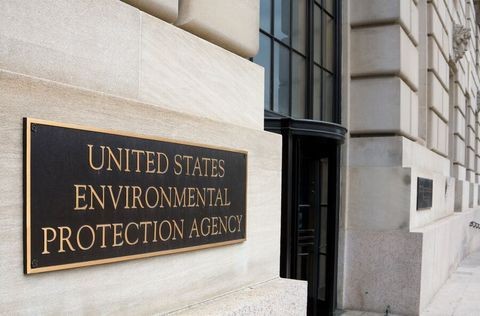
EPA Hands Over AI Data Center Regulation to States and Communities to Develop Best Practices
The nation’s power grid and infrastructure are facing increased pressure from artificial intelligence (AI) data centers, prompting new questions around environmental regulatory design and compliance. As technology companies race to build and expand new data center factories, they face a web of permitting requirements as well as potential community opposition, and environmental litigation — all against a backdrop of rapid and still-evolving agency guidance.
Client Alert | 3 min read | 06.22.26
Client Alert | 4 min read | 06.17.26
From Checkout To Opt-Out: The EU Withdrawal Button Is Here – What E-Commerce Businesses Need To Know
Client Alert | 6 min read | 06.17.26
