
Congress Passes Combined COVID-19 Relief and Omnibus Spending Bill
Client Alert | 2 min read | 12.23.20
The U.S. Congress passed a combined COVID-Relief and Omnibus Spending Bill on Monday, December 21, 2020. The Consolidated Appropriations Act of 2021—both funded the U.S. government for FY 2021 and included a variety of COVID-19-related relief measures. The COVID-19 bill includes about $900 billion in new federal spending. It also repurposes $429 billion in unused CARES Act funding for the Federal Reserve Main Street Lending Program. The combined appropriations-COVID-19 stimulus relief package is the second largest in the nation’s history behind the CARES Act passed earlier this year.
President Trump is threatening a veto of the bill which may prompt further Congressional action to override his veto or to draft and pass new legislation which would increase the amount of stimulus checks from $600 to $2,000 per qualified American. It could also prompt Congress to pass a new Continuing Resolution (CR) to fund the U.S. government from the current CR termination date of December 28, 2020 into next year without overriding the President’s veto and with the COVID-19 Relief and Omnibus Spending Bill passed by Congress not becoming law. However, regardless of the Congressional response to the President, the main provisions of the bill summarized below are not expected to change, but rather, are expected to be in the final passed legislation if Congress overrides the veto or the President decides to sign the bill in the coming days.
The bill most notably currently includes:
- Stimulus checks - $600 in direct payments to certain qualified Americans
- Unemployment compensation – up to $300 a week in enhanced benefits
- Payroll Protection Program (PPP) - $284 billion in new funding for businesses
- COVID-19 Response Funding - direct new funding including:
- $20 billion for additional COVID-19 testing capacity
- $20 billion for additional COVID-19 vaccine purchases
- $8 billion for COVID-19 vaccine distribution
The combined package had broad bipartisan support in Congress with a vote in favor of the legislation of 359-53 in the House and 92-6 in the Senate. To find consensus, Democrats and Republicans alike were forced to abandon key tenets of earlier proposals. Democrats agreed to drop a provision that would have delivered funding to state and local governments and in return Republicans dropped a provision that would have granted businesses broad liability protections in the return to work effort.
It is likely that any stimulus negotiations early in the Biden Administration will begin with those partisan priorities in mind. Congressional Democrats and the President-Elect have indicated that another round of stimulus measures will be the first order of business following inauguration. Republicans have yet to voice support for future relief spending, although Senate Majority Leader Mitch McConnell (R-KY), who is undoubtedly closely watching the Georgia Senate run-offs that will decide the majority of the Senate in 2021, says he and the Republican caucus will consider a potential future Biden stimulus package.
Stacie Heller, Senior Policy Director at Crowell & Moring, also contributed to this alert.
Contacts








Insights
Client Alert | 3 min read | 06.12.26
DOJ Guidance Backs Away From Disparate Impact Liability
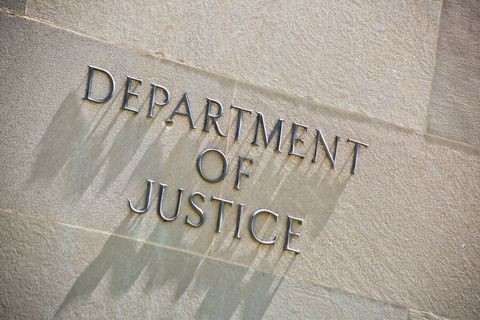
On June 9, 2026, the U.S. Department of Justice (DOJ) issued a formal opinion concluding that the Equal Opportunity Employment Commission’s (EEOC) existing interpretations of Title VII of the Civil Rights Act of 1964 (Title VII) disparate-impact liability, including the Uniform Guidelines on Employee Selection Procedures (UGESP), are unconstitutional. According to the opinion, EEOC’s prior interpretations contemplate liability based on disproportionately adverse effects alone, without regard to an employer’s likely intent, rather than treating disparate impact as an evidentiary mechanism to “smoke out” intentional discrimination. DOJ found that this approach functions as a “qualified racial-proportionality mandate” that places “a racial thumb on the scales, often requiring employers to evaluate the racial outcomes of their policies, and to make decisions based on (because of) those racial outcomes.” The opinion fulfills one mandate of Executive Order 14281, which rejected disparate-impact liability insofar as it “creates a near insurmountable presumption that unlawful discrimination exists wherever there are any differences in outcomes among different [demographic groups].”
Client Alert | 4 min read | 06.12.26
Auto Dealers: The FTC Is Back in the Driver’s Seat — Warning Letters Signal Renewed Federal Scrutiny
Client Alert | 13 min read | 06.12.26
Client Alert | 4 min read | 06.12.26
